Dr. Candi Vincent Highlighted at emPower Breakfast
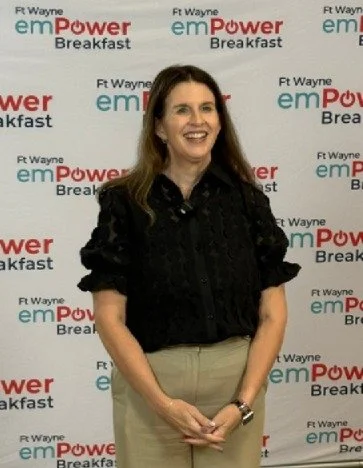
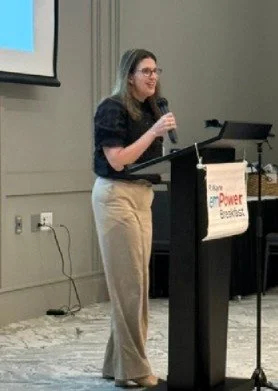
I had a wonderful opportunity to connect and network with professionals from the Fort Wayne region at the emPower breakfast today. With my short time to speak I focused on belonging and the importance it plays in our lives. Please enjoy these excerpts from my discussion.
Let’s Talk About Psychological Assessment
Somewhere along the way the term psychological evaluation started getting used very loosely. Let me be very clear… a couple of rating scales, a brief intake, and a quick diagnostic impression are not a psychological evaluation. That is a screening. A potentially life altering label of an Autism Spectrum Disorder, learning difference, or even executive dysfunction requires a comprehensive assessment by a qualified and specially trained professional.
A true comprehensive psychological evaluation takes its time on purpose. It begins with listening and specific questions about developmental history, school patterns, medical factors, family dynamics, trauma exposure, personality style, strengths, cultural context, sleep, stress levels, coping tools and on and on.
Human beings are layered and nuanced and symptoms rarely exist in isolation. If the clinician isn’t mapping out the full landscape, they are working with a partial picture and partial pictures lead to partial answers, inaccurate diagnostics, inappropriate treatment planning, and poor care.
Intentional Choices-Intentional Testing
Appropriate psychological assessment isn’t good just because a lot of instruments are used and it is definitely not one size fits all. It’s about selecting the right tools for the specific referral questions. If someone, hopefully a licensed psychologist, is evaluating for an attention disorder (ADHD) that doesn’t mean you just administer an ADHD rating scale and call it a confirmed diagnosis. To accurately diagnose an attention disorder a client needs cognitive testing, executive functioning measures, emotional functioning assessment, academic data, possible academic achievement evaluation, behavioral observations, and observer reports. At this point you may ask, Why? Why do we need all of this information and I say Because!!! Because anxiety can look like ADHD. Depression can impact a person’s ability to concentrate. Trauma can mimic inattention. Giftedness can mask learning challenges, and Autism can look like so many other things.
Differential Diagnosis - Where The Work Happens
Differential diagnostic work is the part that clients don’t see, but it’s where the integrity of the evaluation truly lives. Differential diagnostic work occurs in competent comprehensive evaluations and asks deep and difficult questions. A comprehensive differential asks what else could explain this presentation? What diagnoses can and do overlap here? What diagnoses can we rule out? Is there more than one issue occurring at the same time? In my experience it is rarely a simple yes or no answer. It’s looking for patterns across multiple data sources and that requires training, supervision, and experience.
Scores Don’t Diagnose - Psychologists Do
Most testing instruments yield numerical data, numbers are data, they are not in themselves conclusions. Standardized scores must be interpreted in context with behavioral presentation, history, cultural background, motivation, effort, medical history, family background and so forth. Two people can have the same score and have very different stories. An experienced psychologist integrates this data and is specifically trained to administer measures so the numbers are as correct as possible and then integrates all the information into a meaningful whole.
Let’s Talk Reports
A comprehensive psychological report should explain many things including: the referral question, background and history, tests administered and why, behavioral observations, results across domains, diagnostic reasoning, strengths and protective factors, and specific, actionable, personalized recommendations. A report should read like someone really, truly understands you. And.. you should have a feedback session where the results are explained, clearly, respectfully, and thoroughly.
Training Matters; Not Every License and Degree is the Same
Psychological assessment is a specialty competency. It requires doctoral-level education, supervised training regarding standardized assessment and statistical properties, and ethical responsibility around scope of practice. Not every mental health provider is trained in comprehensive assessment. That’s not a criticism, it’s simple reality. Assessment and therapy are overlapping but comprehensive psychological assessment is a distinct skill set. If you are seeking a psychological evaluation I encourage you to ask questions about your providers license, formal training, continuing education, evaluation process, report, and feedback process. You are allowed to ask questions and feel comfortable with the answers. True evaluation is a collaborative process.
So Why Does It All Matter? Geez, Why is Dr. Vincent on a Soapbox tonight?
Diagnoses are a big deal and they can impact a lot of things including education plans, workplace accommodations, medical treatment, insurance coverage, employment ability, identity, and even self-understanding. Diagnoses are not casual conclusions or hunches, and shouldn’t be given out willy nilly without mindful processes, differential integrity, and due diligence. An evaluation should feel rigorous, compassionate, scientific, and human. You deserve an evaluation that treats your brain and story with respect and captures the true nuance of the concerns and questions that are present. You deserve a provider that holds these standards high and provides ethical and quality care.
Creativity Is How We Stop Building a Life Around Everyone Else’s Expectations: Why Your Brain Needs Space to Make Things
Lately I’ve been noticing an ache, an exhaustion, I get this feeling when work days and nights become too long and paperwork fills every second of free time. When the day is all tasks and there’s no time to wonder, something in me starts to dim. It’s subtle at first, less color, less energy, less spark, more fatigue. The tired isn’t just about sleep or schedule overload, it’s deeper and quieter. It’s an empty feeling, a craving for something I can’t quite name.
It took me a while to admit it, but the hunger, the fatigue is always the same, I need creativity. Not as a decoration, but as nourishment for my soul. We tend to treat creativity like it’s optional, something for artists, or for our “free time,” whenever that mythical creature shows up. But, creativity is necessary fuel for the soul.
As a psychologist, I can name the fatigue and the ache clinically: cognitive fatigue, nervous system dysregulation, burnout, emotional blunting. But as a human being? I know it’s something simpler and more ancient. We’re starving for creativity and we don’t even realize it.
Creativity Isn’t a Hobby: It’s Nervous System Medicine
One of the most misunderstood truths in women’s mental health is that creativity isn’t “extra.” Creativity is regulation. Creativity is coherence. Creativity is how the brain shifts out of survival mode and reopens pathways for clarity, problem-solving, and emotional resilience. When we create, when we write, paint, imagine, arrange, doodle, or even daydream, we activate the body. We activate the same neural circuits involved in stress reduction, emotional processing, cognitive flexibility, motivation and reward, and identity rebuilding. This is why you feel calmer after rearranging a room, or why journaling helps your anxiety soften, or why an idea arriving out of nowhere can feel like oxygen. Creativity literally recalibrates the nervous system. This matters deeply for anyone caught in the burnout cycle, but especially for high-achieving women with anxious brains. The constant pressure to be efficient, composed, and endlessly productive leaves little space for imagination and without imagination, the mind becomes rigid, brittle, and overcontrolled.
Creativity is the antidote.
The Hidden Burnout: When You Haven’t Created Anything Just For You
There’s a particular emotional ache I see over and over in my clinical work. A woman sits across from me and says, “I just don’t feel like myself anymore.” She isn’t depressed in the classic sense. She isn’t overwhelmed by a crisis. She’s just…flat, dull around the edges. When we sit and explore the timeline, there’s almost always a moment where creativity slipped out of her life. Maybe she stopped journaling, baking for fun, stopped painting, sketching, writing, imagining, or dreaming at all.
Her days have become purely functional. Her nervous system has switched into chronic task mode. Her brain has forgotten it is allowed to wander toward beauty. This is the quiet burnout, the one we don’t notice until everything inside feels tight and airless.
Creativity and Mental Health: What the Research Keeps Telling Us
Psychology and neuroscience have been shouting this truth for years that creative expression significantly improves mental health outcomes. Studies show that creativity lowers cortisol, the stress hormone. Creativity enhances mood and emotional stability and supports trauma recovery by helping the brain integrate fragmented experiences. Creativity strengthens executive function, which is essential for focus, planning, and decision making. Creativity reduces anxiety by activating the default mode network in healthy ways rather than rumination and builds identity, a core component of resilience.
In my clinical practice, I see these benefits play out every week. Creativity helps clients move out of fight or flight and back into themselves. It’s one of the most powerful tools for sustainable mental health and yet it’s one of the first things we sacrifice when life gets heavy.
Why We Lose Our Creativity (And Don’t Notice Until It Hurts)
Creativity demands spaciousness, mental, emotional, and sometimes literal. Modern life runs on scarcity, scarcity of time, silence, imagination, and internal permission. Most of us live inside survival-mode calendars. We wake up already behind. We rush through our days without a moment for wonder, let alone intentional creative play or pure creation. Creativity isn’t necessarily required to keep the lights on, so we often treat it like a luxury reserved for people with more free time, more talent, or a different kind of life. The truth is painfully simple, the less creative space we have, the more dysregulated we become. When our nervous system stays dysregulated long enough, we lose access to intuition, joy, curiosity, and hope which are all foundational components of mental health.
My Personal Realization: The Ache That Wouldn’t Go Away
Tonight, I finally named it in myself. This tugging, the distraction, the restless energy that’s been shadowing me for weeks. Not sadness, not anxiety, not burnout in the textbook sense. Just a longing for the part of my mind that feels alive when I’m creating. The part that dreams. The part that doesn’t perform, doesn’t rush, doesn’t optimize, just plays. I didn’t need a vacation or a grand reinvention. I needed to make something. Even something tiny. Even this writing, which feels a little like a breadcrumb trail back to myself.
If You’ve Been Feeling Flat, Here’s My Honest Invitation
You don’t need a big creative project to feel whole again. You don’t need talent or hours of uninterrupted time. You don’t even need a plan. You just need a doorway. A crack in the wall. A moment that feels like yours.
Try one small thing: write three lines in a journal, rearrange one corner of a room, scribble something that looks like nothing, daydream without apologizing, or pick up a forgotten hobby for just ten minutes. Your nervous system doesn’t care how it looks or what it sounds like. It only cares that you return.
Creativity is Fuel And You Deserve to Be Well-Fed
If you’ve felt uninspired, foggy, or disconnected from yourself, there is nothing wrong with you. Your brain is asking for beauty. Your spirit is asking for spaciousness. Your nervous system is asking for something softer than survival. Creativity is not a luxury. It’s how we remember who we are. It’s how we stay emotionally alive and mentally well. It’s how we come home to ourselves again and again.
Tonight, I honored that part of me. Maybe this is your sign to honor yours too.
Dr. Candi
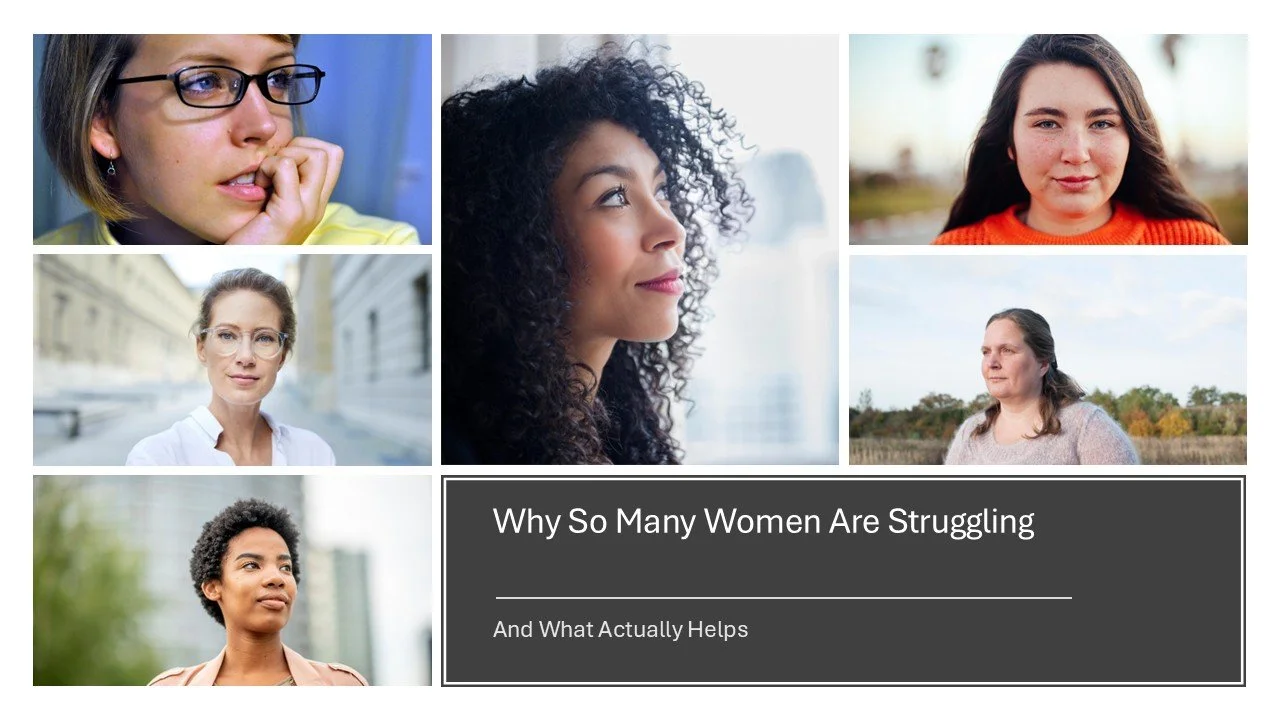
Women’s Mental Health in Fort Wayne: Why So Many Women Are Struggling And What Actually Helps
Women’s mental health in Fort Wayne is a rising concern. Many women are navigating anxiety, depression, burnout, overwhelm, and identity shifts, often in silence. Here’s what actually helps.
Why Women’s Mental Health Needs Are Rising in Fort Wayne and Beyond
Women are burning out in a way that looks quiet from the outside and catastrophic on the inside. In Fort Wayne, I see it every week, women who are smart, capable, hardworking, deeply caring, and barely holding it together. They say things like, “I can’t keep doing this,” “I’m so tired, but I can’t slow down,” “I don’t even recognize myself anymore.” The truth is women’s mental health in Fort Wayne and beyond is not a niche issue, it’s a community trend. Women’s mental health deserves real attention, real language, and real support.
The Invisible Weight High-Achieving Women Carry
You know this weight. Most of the women who walk into my office do. Pressure to do well at work. Pressure to be the emotional center of the home. Pressure to look strong and put-together while quietly falling apart. This is where anxiety hardens into burnout. This is where depression hides behind competence. This is where self-doubt takes root even in women who are extraordinary. It happens so often, but why?
Common Mental Health Concerns Women Face in Fort Wayne and Beyond
Anxiety and panic (often masked by perfectionism)
Burnout and emotional exhaustion
Depression that hides beneath productivity
Identity loss after major life transitions
Executive functioning struggles from chronic overwhelm
People-pleasing and resentment cycles
Trauma responses that look like “being too sensitive”
These aren’t “weaknesses.” They are nervous system responses to impossible expectations.
Why High-Achieving Women Often Don’t Ask for Help
Women who succeed, women who care, often women in general have a habit of believing they should handle everything alone, perfectly, and on time. They wait to reach for help until their chest is tight daily, sleep stops working, they cry in the car, their confidence evaporates, or their joy is nowhere to be found. But, by then their nervous system has been sounding alarms for months but they haven’t had time to listen.
There is no trophy in life for suffering in silence. Their is relief, clarity, and a way forward with the right support and the courage to ask for help.
What Actually Helps Women Heal
Healing isn’t just symptom reduction. It’s reclamation!
Nervous System Education helps women understand what’s happening inside their body, reduces shame, and increases control. It’s important to remember that the mind isn’t “failing” it’s overwhelmed.
Cognitive Behavioral Therapy (CBT) for anxiety and burnout and not the stiff, clinical version, the strategic, empowering version that helps women reclaim thoughts, patterns, and possibilities.
Trauma-informed support because women often carry multigenerational weight. Trauma-informed therapy helps women stop rewriting old stories with their current life.
Identity rebuilding because women don’t need a personality makeover, they need permission to return to who they were before life became too much and too big.
Lifestyle and nervous system rituals like breathwork, pacing, transitions, somatic grounding, and daily micro-habits that rebuild resilience in a sustainable and realistic way.
Healing is rarely dramatic. It’s often a series of small, strategic resets that can accumulate into a life that finally feels like yours again.
Frequently Asked Questions About Women’s Mental Health in Fort Wayne and Beyond
Q-What are the signs I should see a therapist for anxiety, depression, or burnout?
A-If your functioning, sleep, relationships, or sense of self are suffering, that’s enough of a reason to reach out for help. You don’t have to be “in crisis.”
Q-Do I have to choose between therapy and coaching?
A-No here. VIP blends psychology, performance psychology principles, nervous system science, empathy, authenticity, and relationship to support women who want both healing and growth.
Q-What if I’ve tried therapy before and it didn’t help?
A-Then you need a different approach, maybe one that sees you as a whole person, not a list of symptoms.
Q-Is therapy at VIP covered by insurance?
A-VIP is a self-pay practice. This allows for deeper, individualized care, flexible scheduling, and a pace that honors your life, not insurance requirements, pre-authorizations, session limits, and restrictions.
Q-What’s the next step?
A-Start with a free consultation. We’ll explore what’s happening in your life, what you want, and where you feel stuck.
You Don’t Have to Keep Carrying This Alone
If you’re navigating anxiety, depression, burnout, identity shifts, grief, or emotional overwhelm, you are not failing, you are human. You don’t have to walk alone there is help.
If you’re looking for support with women’s mental health in Fort Wayne and beyond, you’re exactly where you need to be.
Schedule your free consultation. Explore VIP clinical and coaching services. Explore VIP Reclamation for deeper identity and nervous system work. Learn about VIP Discovery for those individuals needing assessment.
You’re allowed to want a life that feels softer, steadier, and more like your own. You don’t have to wait any longer for it.
Giving Tuesday
Giving Tuesday Reflections
Tonight feels like a good moment to slow down and remember what generosity actually means.
Not just money.
Not just resources.
But the ways we show up for each other, the quiet ways we support our communities, the moments we choose to care when no one is watching.
Giving Tuesday always reminds me that we're all connected. When a child gets the support they need, a classroom changes.
When a woman feels seen and cared for, a family shifts.
When someone receives mental health support at the right moment, an entire future opens.
Generosity is how we soften the world for one another.
So whether you give to a local nonprofit, donate items, support a cause close to your heart, or simply offer kindness that cots nothing, you're helping build a stronger, more compassionate community.
If tonight feels heavy or complicated, that's okay too. Giving can look like caring for your own nervous system, honoring your limits, and choosing gentleness with yourself.
Here's to the people and organizations doing good work in quiet, powerful ways. And here's to the small acts of care that ripple farther than we ever see.
- Dr. Candi
Giving Tuesday Reflections
Tonight feels like a good moment to slow down and remember what generosity actually means.
Not just money.
Not just resources.
But the ways we show up for each other, the quiet ways we support our communities, the moments we choose to care when no one is watching.
Giving Tuesday always reminds me that we're all connected. When a child gets the support they need, a classroom changes.
When a woman feels seen and cared for, a family shifts.
When someone receives mental health support at the right moment, an entire future opens.
Generosity is how we soften the world for one another.
So whether you give to a local nonprofit, donate items, support a cause close to your heart, or simply offer kindness that cost nothing, you're helping build a stronger, more compassionate community.
If tonight feels heavy or complicated, that's okay too. Giving can look like caring for your own nervous system, honoring your limits, and choosing gentleness with yourself.
Here's to the people and organizations doing good work in quiet, powerful ways. And here's to the small acts of care that ripple farther than we ever see.
- Dr. Candi

Murder at Mardi
VIP is thrilled to support Blessings in a Backpack Fort Wayne as a Bourbon Street Benefactor at this year's Murder at Mardi event. This organization makes a meaningful impact, ensuring kids in our community have food, comfort, and stability.
If you're looking for a fun night out that also supports an incredible mission, this event is one to put on your calendar. Proud to stand behind the work Blessings in a Backpack Fort Wayne does.
VIP is thrilled to support Blessings in a Backpack Fort Wayne as a Bourbon Street Benefactor at this year's Murder at Mardi event. This organization makes a meaningful impact, ensuring kids in our community have food, comfort, and stability.
If you're looking for a fun night out that also supports an incredible mission, this event is one to put on your calendar. Proud to stand behind the work Blessings in a Backpack Fort Wayne does.
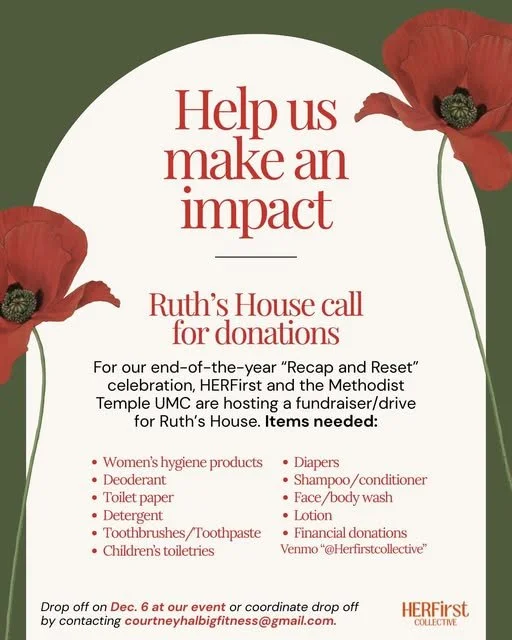
HERFirst Collective - Recap & Reset: End of Year Event
From HERfirst Collective…
Hey everyone! For our end-of-year "Recap & Reset" event, we're donating to and fundraising for women's shelter Ruth's House
In collaboration with the Methodist Temple UMC, we're looking for donations of the items listed below. Anything goes a long way! Help us help other women in our community.
See you on Dec. 6! Have any questions? DM us or contact courtneyhalbigfitness@gmail.com
Hey everyone! For our end-of-year "Recap & Reset" event, we're donating to and fundraising for women's shelter Ruth's House
In collaboration with the Methodist Temple UMC, we're looking for donations of the items listed below. Anything goes a long way! Help us help other women in our community.
See you on Dec. 6! Have any questions? DM us or contact courtneyhalbigfitness@gmail.com